What is the aorta?
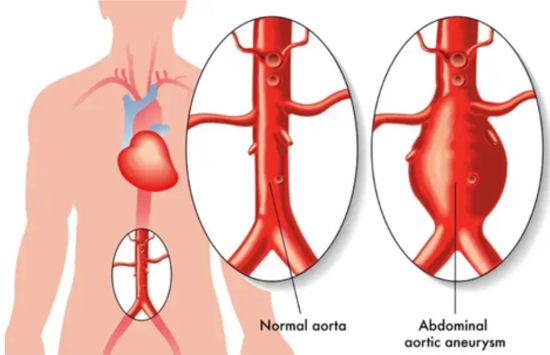
The aorta is the largest blood vessel in the body. It carries oxygen rich blood from the heart to the rest of the body. It travels,
From the heart through the chest (thoracic aorta)
Down through the abdomen (abdominal aorta)
Below the level of the belly button, where it divides into the arteries that supply the legs
What is an aortic aneurysm?
An aneurysm is a weak area in a blood vessel that balloons or enlarges over time.
An aortic aneurysm means that part of the aorta has become enlarged. This can happen anywhere along the aorta.
Aortic aneurysms are:
More common in men
More often found in people over 55 years of age
More likely in people who have:
- Smoked in the past
- High blood pressure
- High cholesterol
- A family history of aneurysms
If someone is diagnosed with an aortic aneurysm, close family members may be advised to have screening (usually after age 50).
Why is an aneurysm a concern?
The main risk is rupture (bursting) of the aneurysm.
A ruptured aortic aneurysm is a life threatening emergency.
Many aneurysms grow slowly and cause no symptoms. When an aneurysm is
small, it is usually monitored with regular ultrasound or CT scans.
When is surgery needed?
Surgery is usually recommended when:
The aneurysm reaches 5–5.5 cm in size, or
It is growing quickly, or
There are other risk factors that increase the chance of rupture
At this size, the benefits of surgery are greater than the risks.
Types of surgery
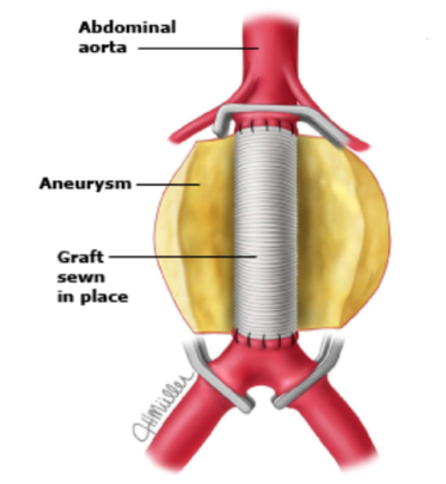
1. Open Surgical Repair
This is a traditional operation.
A large cut is made in the abdomen (or chest, depending on the aneurysm)
The weakened section of the aorta is removed
A strong synthetic tube (graft) is stitched in its place
What to expect
Major surgery
Longer hospital stay
Recovery over several weeks
Once healed, it is usually a
very durable repair.
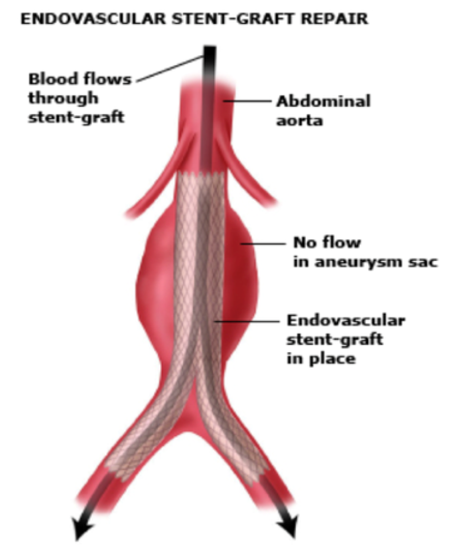
2. Endovascular Repair (Keyhole Surgery)
This is a less invasive procedure.
A stent graft is passed through small cuts in the groin arteries
The stent lines the inside of the aorta and re-directs blood away from the
aneurysm. This reduces pressure on the weakened area.
Depending on the aneurysm, this may
involve:
A single stent
Multiple stents (often shaped like
trousers for abdominal aneurysms)
Special custom-made stents for
complex aneurysms involving
important arteries (e.g. kidneys or
bowels)
What to expect..
Smaller cuts
Less blood loss
Faster recovery
Often preferred for older patients or those with other medical conditions.
Lifelong follow-up scans are required to check the stent