
Pelvic Congestion Syndrome
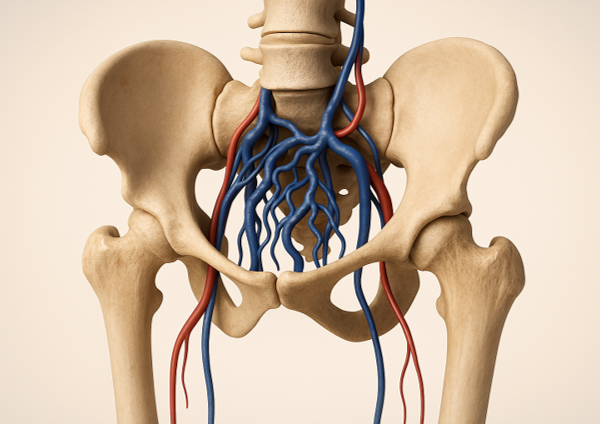
Pelvic Congestion Syndrome (PCS) is a common but often overlooked cause of chronic pelvic pain, particularly in young to middle‑aged women. It occurs when veins in the pelvis do not drain blood properly, causing pressure and discomfort — similar to varicose veins in the legs.
What Causes PCS?
PCS develops when pelvic veins, most commonly the ovarian veins, become weak and allow blood to flow backwards and pool in the pelvis. This increased pressure can lead to ongoing pain and other symptoms.
Common Symptoms
Symptoms can vary but often include:
- Chronic or aching pelvic pain
- Pain that is worse around menstruation
- Pain during or after intercourse
- A history of multiple investigations with no clear diagnosis
Some women may also experience varicose veins in the legs or vulval area, urinary urgency, haemorrhoids, or bowel‑type symptoms.
How Is It Diagnosed?
PCS is usually investigated with imaging such as:
- Pelvic ultrasound
- CT scanning
These tests help identify abnormal pelvic veins and guide treatment.
Treatment Options
Pelvic Congestion Syndrome is treatable, most commonly with minimally invasive procedures.
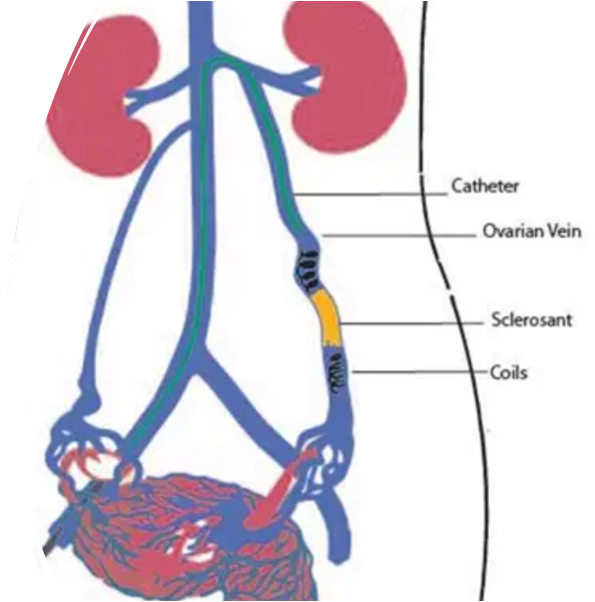
Coil Embolisation
- The most common treatment
- Small coils are placed in faulty veins to stop backward blood flow
- Reduces pelvic pressure and congestion
Venous Stenting
- Used when narrowed or blocked veins are contributing to symptoms
When to Seek Advice
If you have long‑standing pelvic pain that remains unexplained despite testing, Pelvic Congestion Syndrome may be worth considering. Modern treatments can target the underlying vein problem and provide significant symptom relief.